
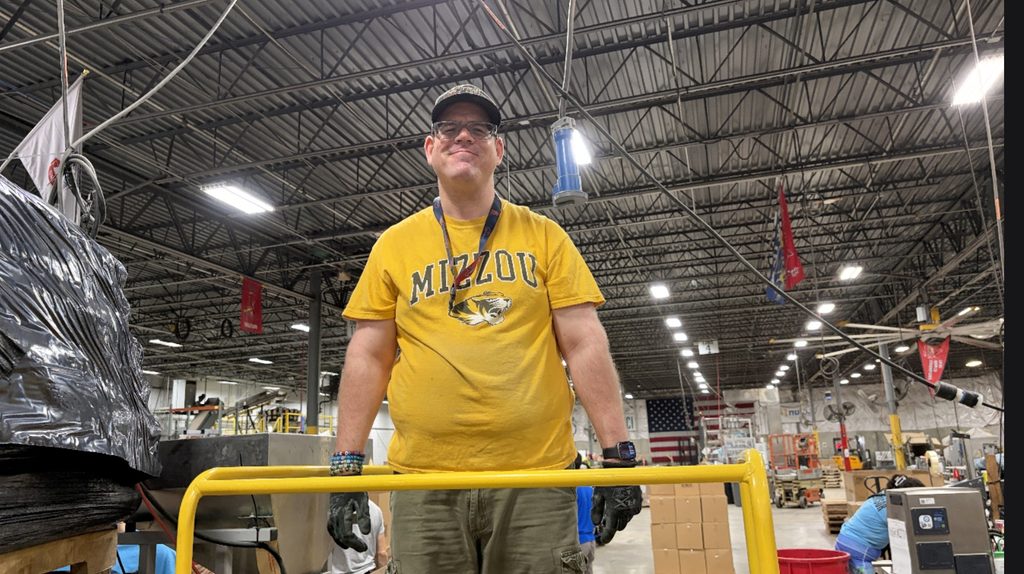
Local vocational training program creates opportunities for people with intellectual and developmental disabilities (I/DD) to pursue careers, fill workforce gaps, and gain greater independence
October is National Disability Employment Awareness Month (NDEAM), a time to recognize the contributions of workers with disabilities and the advocates and employers who open doors for them. Workforce training and employment support is a priority focus of the Developmental Disabilities Resource Board of St. Charles County (DDRB), which funds local service agency partners to expand employment opportunities for residents with intellectual and developmental disabilities (I/DD). The workforce-focused programs the DDRB funds help people with I/DD to prepare for, find, and retain employment, including employment-readiness programs, job training, supported employment, and job-retention services. These resources also help local employers connect with qualified candidates and offer support that sets new employees up for success.
One of the strongest examples in St. Charles County sits just across the highway from True Manufacturing’s campus in O’Fallon, Missouri. Here, a local workforce program is helping people with I/DD develop valuable job skills while creating new opportunities to contribute to the local workforce and community. Since 2019, Boone Center Inc. (BCI) and True Manufacturing have been building a vocational training partnership that prepares people with I/DD for jobs at True. BCI calls this program its flagship partnership and recently graduated its 18th cohort, with 75 graduates to date.
How It Started
BCI, a long-time partner and DDRB funding recipient, is a St. Charles County-based nonprofit that offers a range of employment opportunities and skills-building tailored to each person’s abilities, interests, and goals.
The spark for this partnership grew from a personal connection at True Manufacturing, a producer of commercial refrigeration products made and assembled in Missouri.
In true Midwestern fashion, an engineering manager at True knew a member of BCI’s leadership team and knew that BCI was already handling small tasks for True within its own facilities.
“Originally, it started out as more of a temp program to fill open roles and provide some job exposure and experience,” said Katie Anderson, Assistant Director of Human Resources at True Manufacturing. “But after seeing the success of these initiatives, we came up with our vocational training program, where we’ve evolved into a true classroom-type setting.”
Growing Skills
BCI built its Vocational Training Center as a “mini True,” a replica work area with refrigerators, tools, and a dedicated training curriculum. Candidates apply, interview, and tour True before enrolling, and families, caregivers, and advocates are encouraged to come along.
Training runs 120 hours over six weeks and is taught on-site by a BCI instructor. The curriculum includes 80 hours of hard-skills training, like using a drill or machinery and understanding job-site safety. The other 40 hours cover soft skills, from self-advocacy and workplace relationships to budgeting and money management.
“For a lot of our students, they will be making more money than they’ve ever made,” said Jamiecea Williams, Director of Vocational Training at BCI. “And that also then impacts their benefits. It’s important we help them to understand the full spectrum of what being an employee means.”
The team at True Manufacturing is deeply committed to this program and receives support at every level of the organization. Operational Specialist Matt Lucas keeps the curriculum current, and COO Steve Young visits during training.
Support Beyond the Classroom
Before graduating from BCI’s Vocational Training, they share each student’s strengths and challenges with the True team, so plant leadership can choose the right placement. With several locations across O’Fallon, True can be creative with its job offerings and open positions, and some employees have moved to areas such as shipping parts, where they thrive.
After graduation, new hires attend True’s regular full-time orientation, which exposes them to the ins and outs of employee life at True Manufacturing. For ongoing employee support, True’s HR team, which includes a former job coach, is the first call for questions. When something needs more clarity, True brings BCI in. “It’s an open door to them over here,” Anderson says.
BCI and True say the program’s success lies in the success of its graduates. Since 2019, 75 graduates have been hired at True Manufacturing. In 2026, 32 of those graduates are still employed by True, resulting in a 43 percent retention rate.
Dependable, Proud, and Ready to Work
“When you hire a BCI Vocational Training graduate, you are getting an employee who truly values hard work. They show up early, stay late, and get the job done,” said Williams, noting retention beats rehiring every six months.
Recent program results show that 66 percent of graduates are employed for at least one year, and 53 percent are still employed after three years. The program celebrates two incredible graduates who have both worked at True for over seven years.
“Our employees take pride in their work, too. A recent BCI graduate leads tours of True’s buildings and helps ensure every visitor wears the proper PPE. Another earned his driver’s license and bought a car since starting with True, and another team member has been employee of the month in the parts department,” says Anderson.
But the benefits go far beyond retention. Since the program’s inception, True’s CEO has described a culture shift toward more empathy, understanding, and camaraderie across the company’s entire workforce.
Advice for Other Employers
Have patience. “Making the right placement is very important,” says Anderson. “Everybody just has different skill sets, and it can take time to make that match.”
Be open-minded. “One person with an intellectual or developmental disability may be very different from another, so employers should get to know individuals and lean on partners like BCI for advice, support, and inclusion training,” adds Williams.
Get creative. Williams shares, “We often find that many people could excel at three-quarters of the requirements for a role, so we urge employers to be creative when hiring and rethink how a job description divides the work.”
Stay flexible. A common myth is that inclusive hiring requires major accommodations. This is rarely true. Williams states, “There are a variety of skills and roles employees from the I/DD community bring to the table that don’t require significant financial investments or cost-intensive changes to the workplace. We help employers to stay flexible when hiring so they can begin to see the entire process differently.”
Get Involved
Businesses interested in learning more about True’s Vocational Training program or opportunities to partner with BCI are encouraged to reach out to Jamiecea Williams at jwilliams@boonecenter.com. BCI enrolls new classes throughout the year, and True Manufacturing welcomes any employer who wants to see the program firsthand.
To learn more about the BCI’s partnership with the DDRB, please visit ddrb.org/resource/bci/.
Organizations without open positions can still help with workplace exposure by offering tours, job-shadowing, and unpaid pre-employment experiences.
\